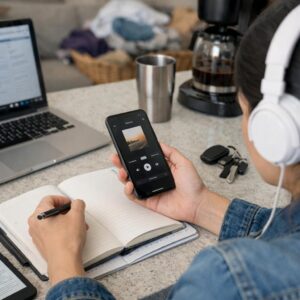
What if your “no time to read” problem is really a routine problem?
Audiobooks can turn commutes, chores, walks, and workouts into reading time-but only if listening becomes automatic instead of occasional.
The mistake most people make is treating audiobooks like background noise. A routine that actually works needs the right book, the right moment, and a simple system for staying engaged.
This guide will show you how to build a daily audiobook habit that fits your life, holds your attention, and helps you finish more books without forcing extra hours into your day.
Why a Daily Audiobook Routine Works Better Than Occasional Listening
Occasional listening feels productive, but it often turns audiobooks into background noise. A daily audiobook routine works better because it connects listening to an existing habit, such as commuting, walking, cooking, or using a treadmill, so you do not rely on motivation every time.
The real benefit is consistency. Listening for 20 minutes a day on Audible, Spotify, or Libby usually beats saving a three-hour session for the weekend, because shorter sessions make it easier to remember ideas, finish books, and build long-term learning momentum.
For example, someone who listens during a 25-minute drive to work can finish business audiobooks, personal finance books, or career development titles without adding extra screen time. That same person may struggle to finish anything if they only listen when they “have free time,” because free time is usually the first thing that disappears.
- Better retention: daily exposure helps key points stay fresh.
- Lower cost per use: audiobook subscriptions and premium plans become more valuable when used regularly.
- Less decision fatigue: a fixed listening window removes the need to plan from scratch.
A routine also helps you choose the right audiobook format for each situation. Dense nonfiction may work best at normal speed with noise-canceling headphones, while lighter fiction can fit chores or evening walks. That practical matching is what turns audiobook listening from a nice idea into a reliable personal learning system.
How to Fit Audiobooks Into Your Existing Daily Schedule
The easiest way to build a daily audiobook routine is to attach listening to something you already do, not create another task on your calendar. Think of audiobooks as a “hands-busy, mind-free” habit: commuting, walking, cooking, folding laundry, or waiting at school pickup are often better listening windows than sitting on the couch trying to focus.
Start by choosing one dependable slot and keeping it small. For example, a 20-minute drive to work becomes almost 3.5 hours of listening time each week without changing your schedule. Using apps like Audible, Spotify Audiobooks, or Libby, you can download chapters offline, adjust playback speed, and avoid wasting mobile data if your phone plan has limits.
- Morning routine: Listen while making coffee, stretching, or walking the dog.
- Commute: Use Bluetooth headphones or your car’s audio system for hands-free listening.
- Chores: Save lighter nonfiction, memoirs, or business audiobooks for repetitive tasks.
One practical tip: match the audiobook to the energy level of the activity. Dense personal finance, investing, or career development books usually work better during walks or quiet commutes, while fiction is easier during cooking or cleaning. In real life, this matters more than motivation because poor timing is why many people abandon an audiobook subscription they actually paid for.
If your day feels unpredictable, keep a “backup listening moment” ready, such as ten minutes before bed or during a lunch walk. Small, repeatable sessions beat occasional long ones.
Common Audiobook Routine Mistakes That Break Consistency
One of the biggest mistakes is treating audiobook time like “extra” time instead of assigning it to a specific habit. If you only listen when you feel like it, your routine will disappear quickly. Pair it with something fixed, such as your morning commute, evening walk, gym session, or meal prep.
Another common issue is choosing the wrong book for the situation. A dense business audiobook may work well during a quiet drive, but it can be frustrating while doing errands or working out. For busy environments, lighter nonfiction, memoirs, or short chapters usually keep attention better.
- Starting too aggressively: Planning to listen for one hour daily sounds productive, but 10-15 minutes is easier to maintain.
- Ignoring audio quality: Poor narration or cheap earbuds can make even a great book feel tiring. Good wireless earbuds or noise-canceling headphones can improve focus.
- Not tracking progress: Apps like Audible, Spotify, or Libby help you monitor listening time, bookmarks, and completed titles.
A real-world example: someone with a 20-minute commute may finish more books by listening only in the car than by trying to force a perfect evening routine. The key is reducing friction. Download chapters on Wi-Fi, keep your audiobook app on your home screen, and adjust playback speed to a comfortable pace-not the fastest one possible.
Also, don’t overlook cost. Compare audiobook subscription plans, free trials, library access, and membership benefits before committing. A routine is much easier to keep when the service fits both your schedule and your budget.
Expert Verdict on How to Build a Daily Audiobook Routine That Actually Works
A daily audiobook routine works best when it feels easy enough to keep, even on busy days. Start small, protect one reliable listening moment, and let consistency matter more than total minutes. If a routine requires willpower every day, redesign it.
- Choose audiobooks that match your energy, not just your ambition.
- Use short sessions to build momentum before increasing time.
- Keep the habit only if it improves your day, focus, or learning.
The right routine is the one you can repeat without negotiation.

Dr. Silas Vance is a Doctor of Education (EdD) and a digital literacy researcher focused on the evolution of modern reading. He explores the synergy between cognitive retention and digital interfaces, providing expert insights into the apps and tools that transform how we consume and master information in the digital age.